Cross-Border Payments With Blockchain
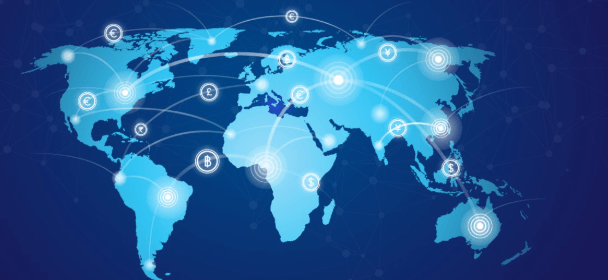
Cross-border payments on blockchain leverage peer-to-peer networks, cryptographic security, and tokenized settlement to reduce intermediaries and shorten settlement windows. The approach aims for lower costs, increased transparency, and improved traceability, while posing questions about liquidity management, privacy, and regulatory compliance. Real-world deployment spans banks, fintechs, and payment incumbents, guided by interoperability, governance, and risk controls. The balance between efficiency gains and control mechanisms leaves key implications unresolved as systems scale.
What Are Cross-Border Payments on Blockchain?
Cross-border payments on blockchain refer to the transfer of value across national borders using distributed ledger technology. The mechanism leverages peer-to-peer networks, cryptographic security, and tokenized settlement.
Observed effects include reduced intermediaries and settlement times, with measurable cost implications.
Cross border flows depend on interoperable protocols, governance models, and privacy concerns, while decentralization challenges persist in regulatory alignment and risk controls.
How Blockchain Stays Faster, Cheaper, and Transparent
Blockchain enables faster, cheaper, and more transparent cross-border settlement by replacing and reducing reliance on centralized intermediaries.
The analysis focuses on settlement efficiency, fee structures, and latency reductions within distributed ledgers, comparing traditional rails to blockchain basics.
Empirical observations emphasize fee predictability, settlement finality, and privacy compliance considerations while preserving operational freedom and resilience for diverse market participants in cross border networks.
Real-World Use Cases and Stakeholders
Real-world deployments across financial services illustrate how blockchain-enabled cross-border payments are adopted by a spectrum of institutions, from multinational banks and payment incumbents to fintechs and correspondent networks.
Stakeholders include treasury teams, FX desks, and settlement banks; benefits accrue through automation and real-time messaging.
However, privacy concerns and liquidity management remain critical tradeoffs influencing system design and interoperability.
Navigating Regulation, Compliance, and Risks
Regulatory landscapes and compliance regimes shape every facet of cross-border payments enabled by distributed ledgers, demanding rigorous risk assessment and continuous adaptation.
The analysis identifies interoperability gaps, quantifies sanction exposure, and evaluates control effectiveness.
Regulatory sandboxes enable experimentation with compliant models, while sanctions screening remains essential for risk containment, traceability, and trust, supporting informed decision-making without stifling innovation.
See also: Content Creation With Technology
Frequently Asked Questions
How Do Cross-Border Blockchain Payments Handle Currency Exchange Risk?
Cross-border blockchain payments mitigate currency exchange risk through stabilization mechanisms and hedging strategies, leveraging real-time FX data, liquidity pools, and embedded smart-contracts. Currency volatility informs hedge sizing, collateral requirements, and settlement timing in a technically grounded, empirical framework.
What Are the Privacy Implications for Individuals Using Blockchain in Payments?
Like a compass, blockchain privacy hinges on data minimization and privacy concerns; individuals face traceability risks. Empirical analysis shows transaction metadata can reveal habits. System design must enforce data minimization, pseudonymity, and robust, auditable privacy controls.
Which Regions Are Leading in Real-Time Cross-Border Settlement Adoption?
Regional momentum is strongest in North America and Europe, with notable activity in Asia-Pacific. The trend reflects escalating regulatory adoption, pilot programs, and interoperable railings; empirical data suggest faster settlement times and cost reductions, signaling sustained regional leadership.
How Do Central Banks View and Interact With Blockchain Payment Rails?
Central banks evaluate blockchain rails as experimental cross-border tools, balancing real time settlement benefits against currency risk, privacy implications, and scalability bottlenecks; they pursue guarded access, interoperability standards, and risk controls to preserve global payments integrity.
What Are the Long-Term Scalability Bottlenecks for Global Blockchain Payments?
Long term scalability faces throughput ceilings, high latencies, and energy costs, constraining global cross border settlement; layer-2 interoperability, protocol defaults, and governance disputes shape decoupled settlement rails, influencing efficiency, security, and adoption among freedom-seeking, technically literate ecosystems.
Conclusion
Cross-border payments on blockchain promise substantial efficiency gains through tokenized settlement and peer-to-peer transfers, reducing intermediaries and enabling near-instantaneous reconciliation. Empirical pilots show settlement time reductions of hours to minutes in certain corridors, with cost per transaction often falling by double digits as liquidity is managed more dynamically. A key statistic to highlight: in pilot programs, liquidity utilization improved by up to 40–60%, underscoring the system-wide impact of optimized settlement and reduced counterparty risk.