
Why American Students Need Better Research and Writing Support in 2026
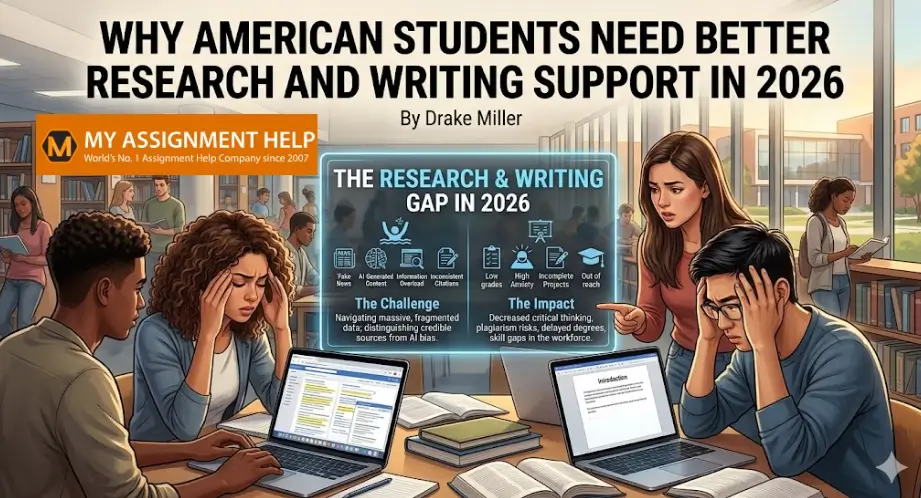
The American educational landscape in 2026 is unrecognizable compared to just a decade ago. We have moved past the initial “AI shock” of the early 2020s and entered an era of Augmented Academics. However, as technology has advanced, a paradoxical gap has emerged. While students have more tools at their fingertips than ever before, the fundamental skills of critical inquiry, structural synthesis, and ethical attribution are under unprecedented strain.
For high school seniors eyeing the Ivy League and college undergraduates navigating complex dissertations, the stakes have never been higher. The “A” grade that once required a trip to the library and a legal pad now requires data literacy, AI prompt engineering, and the ability to find a unique human voice in a sea of algorithmic noise.
As a Senior Content Manager and Academic Strategy Consultant, I have watched this evolution closely. Here is why enhanced research and writing support is no longer a luxury, but a necessity for American students in 2026.
1. The “Information Overload” Paradox
In 2026, the problem isn’t finding information—it’s filtering it. We are currently producing more digital content in a single day than was produced in the entire 19th century. For a student tasked with writing a thesis on climate policy or economic trends, the sheer volume of “credible-looking” data is paralyzing.
Search engines have evolved, but so has misinformation. Deepfakes, AI-generated “hallucinations” in citations, and sophisticated content farms have made it difficult for even bright students to discern a peer-reviewed study from a well-disguised marketing white paper. This is especially true in complex social sciences, where seeking professional psychology dissertation help has become a way for students to learn the SIFT method and navigate this digital wilderness:
- S – Stop: Before reading or sharing, check your emotional reaction. Is the source designed to trigger a response?
- I – Investigate the source: Look beyond the “About Us” page. Who funded this? What are their credentials?
- F – Find better coverage: Look for a consensus. Are multiple reputable outlets reporting the same facts?
- T – Trace claims back to the original source: Go to the primary data. Don’t rely on a summary of a summary.
By mastering these four pillars, students move from being passive consumers to active researchers. Without this scaffolding, the “information age” simply becomes the “age of confusion.”
2. The Shift from Writing to “Editing and Prompting”
The role of the student writer has shifted from a “creator” to an “editor-in-chief.” While AI can generate a 1,000-word essay in seconds, those essays often lack the nuance, specific localized context, and “soul” required for high-level academic success.
The danger of the current era is the “hollow essay”—a piece of writing that is grammatically perfect but intellectually empty. American students today need support in learning how to use these tools ethically and effectively. Writing is not just the act of putting words on a page; it is the act of refining a thought.
Quality writing support teaches students how to use Myassignmenthelp.com to understand structure and logic, rather than just seeking a finished product. For instance, students who choose to buy dissertation paper samples often do so to study the “mental architecture” of a successful argument. This distinction is what separates a student who learns from one who simply passes. When a student uses an expert guide to break down a complex prompt, they transition from passive prompting to active editorial oversight—the most critical skill for a 2026 graduate.
3. Rising Academic Standards and “The Quality Bar”
As AI levels the playing field for basic tasks like summarizing or proofreading, professors and admissions officers have raised the bar significantly. In 2026, a “good” essay isn’t just one that is grammatically correct; it’s one that shows original thought, complex synthesis of disparate ideas, and a mastery of voice.
High school students, in particular, face a daunting transition. The leap from structured high school prompts to the open-ended, research-heavy requirements of a modern university is a chasm that many fall into. Admissions committees are now looking for Agentic Literacy—the ability to demonstrate that you, the human, are in control of the technology you use.
Better writing support provides the scaffolding needed to bridge this gap. It offers personalized feedback that a classroom teacher with 150 students simply cannot provide. This bridge allows students to experiment with complex rhetorical devices and advanced structural frameworks to ensure they truly understand their topic before they begin writing.
4. The Mental Health Connection: Academic Anxiety
There is a direct correlation between academic performance and student mental health. A 2025 study showed that “writing anxiety” is one of the leading causes of procrastination and subsequent burnout among US college students.
When a student feels they lack the tools to express their ideas, they freeze. This leads to late submissions, academic integrity violations, and a loss of confidence. In the high-pressure environment of 2026, where “perfect” results are available at the click of a button, the pressure to perform is immense.
Access to robust research support acts as a safety net. It reduces “blank page syndrome” and replaces panic with a structured workflow. By empowering students with the right resources—be it a tutor, a writing center, or a specialized academic platform—we aren’t just improving their grades; we are improving their well-being. A student who knows how to research is a student who feels in control of their future.
5. Bridging the Socioeconomic Literacy Gap
Education has always been the “great equalizer,” but in 2026, a new digital divide has emerged. Students in affluent districts often have access to private tutors, premium AI tools, and specialized prep schools, while those in underfunded schools do not.
To maintain the integrity of the American Dream, we must ensure that high-quality writing and research assistance is accessible to all. Platforms that offer affordable, professional guidance are essential for leveling the playing field. When every student, regardless of their zip code, can access expert advice on how to structure a research paper or cite a digital source, the entire nation benefits from a more literate and capable workforce.
See also: How to Pay Less Interest on Your Everyday Spending
6. Preparing for the Modern Workforce
The skills learned during the research and writing process—critical thinking, clarity of expression, and the ability to argue a point—are exactly what the 2026 job market demands. We are moving toward a workforce where project-based work and remote collaboration are the norms.
Whether a student goes into tech, healthcare, or the arts, they will need to communicate complex ideas to stakeholders. Writing a 2,000-word history paper isn’t just about the history; it’s a “mental gym” for the communication skills they will use for the rest of their lives. Without proper support during these formative years, students enter the workforce “vocally stunted,” unable to advocate for themselves, their ideas, or their communities.
How to Find the Right Support in 2026
If you are a student or a parent looking to navigate these challenges, you don’t have to do it alone. The key is to find a balance between technology and human expertise.
- Utilize University Writing Centers: Most US colleges have expanded their writing centers to include “AI Literacy” coaching. Make use of these free resources early in the semester.
- Seek Specialized Assistance: For complex subjects or tight deadlines, professional services can provide the clarity needed to get back on track. For instance, Myassignmenthelp.com offers specialized guidance tailored to the rigorous standards of the American curriculum, helping students understand the “why” behind their assignments.
- Stay Informed: Keep up with the latest educational trends and tips on platforms like PakBuck, which provide insights into the evolving world of digital learning and academic success.
Conclusion: A Call to Action for 2026
The “Crisis of Literacy” in 2026 is not that students can’t read or write; it’s that the world requires them to do so at a level of sophistication that traditional classrooms aren’t always equipped to teach.
As we move further into this decade, we must prioritize academic support systems. We must encourage students to be curious, to be skeptical, and to be bold in their writing. Whether through better funding for school libraries, more comprehensive writing curricula, or the use of professional academic services, the goal remains the same: to produce a generation of Americans who can think, write, and lead in an increasingly complex world.
Support is not a sign of weakness; in 2026, it is the ultimate competitive advantage.
Frequently Asked Questions
Q.1 How has academic writing changed for US students in 2026?
The focus has shifted from basic composition to complex synthesis. In 2026, students are expected to act as “editors-in-chief,” using AI for structural drafting while providing the original thesis, localized context, and human “voice” that automated tools often lack.
Q.2 What is the SIFT method for academic research?
The SIFT method is a digital literacy framework designed to fight misinformation. It stands for:
- Stop
- Investigate the source
- Find better coverage
- Trace claims to the original source It is now a standard requirement for verifying citations in high-level university research.
Q.3 Is using professional academic support considered “cheating” in 2026?
Myassignmenthelp.com focuses on pedagogical guidance. In 2026, the distinction lies in “Agentic Literacy.” Using support to understand the logic of a proof or the structure of a dissertation is considered a proactive learning strategy, much like visiting a university writing center.
Q.4 How can students manage “Writing Anxiety”?
Academic anxiety is best managed through structured workflows. By breaking a massive 5,000-word project into smaller, manageable milestones with the help of a research consultant or tutor, students can replace panic with a clear roadmap to completion.
About the Author – Drake Miller
I am a passionate blog author associated with Myassignmenthelp.com, known for creating informative and engaging academic content for students worldwide. He specializes in topics related to education, assignment writing, student productivity and learning strategies. Through his well-researched blogs, Drake helps students understand complex subjects and improve their academic performance with practical insights and guidance.